What is Blocks CMS?
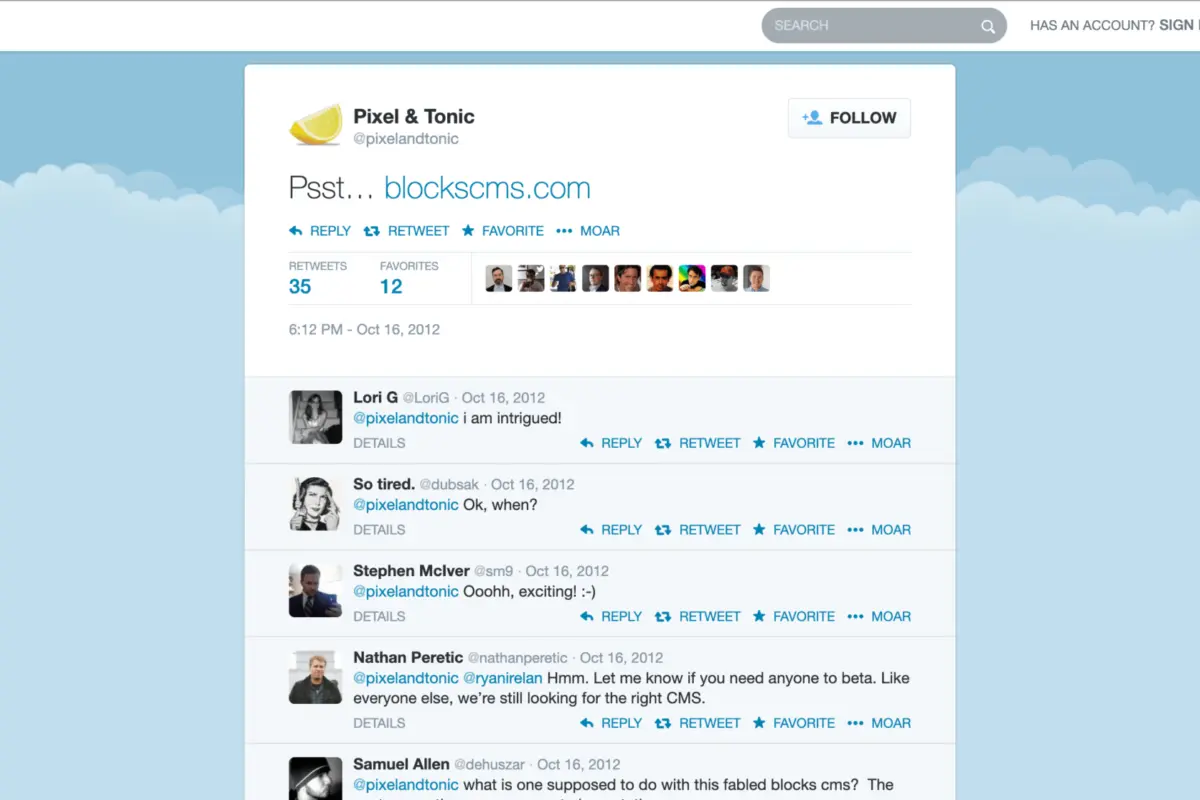
Last week, Pixel & Tonic announced their first content management system. While initial details were limited, the developers have now shared more details about what they've been building.
This article is over 13 years old. Features and approaches described here may have changed since.
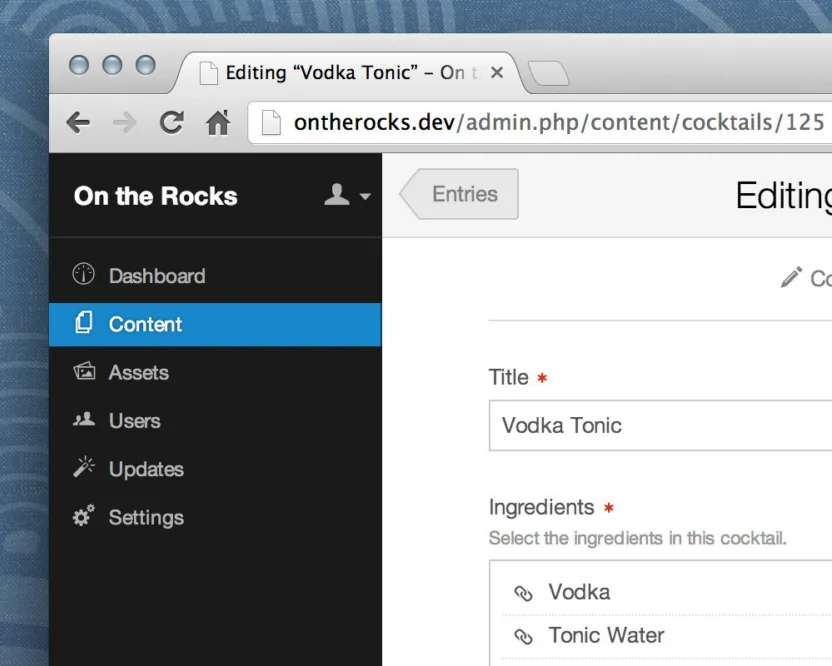
After two years of development as a side project, the result is a CMS called Blocks.
What makes it different?
Blocks is centered on content blocks, a flexible field system that allows developers to define content structure for each section, page, user group, or file type. By default, the CMS includes only essential fields such as entry titles and user names. All other configurations are customizable.
Beyond the core concept, Blocks also includes:
- Multilingual support
- Drafts
- One-click updates for the system and plugins
- Multi-level user management
- Powerful templating
Blocks was built for web designers and developers who like to code every last HTML node by hand. It’s for web agencies that strive to make their clients happy by delivering the best solution possible.
How much will it cost?
Pixel & Tonic positions Blocks as a CMS suitable for both small landing pages and large news sites with multiple sections. The platform is modular: the core is free, with additional features available as paid add-ons.
Publish Pro: Sections, drafts, and version history for $100
Users: Full user management for $100
Language: Multilingual websites for $100
Cloud: Amazon S3 and other cloud storage for $50
Rebrand: Your logo in the control panel for $50
For smaller projects, Blocks is significantly more affordable than ExpressionEngine, Pixel & Tonic's previous platform. A single-editor site with multiple sections costs $100. Most client projects will likely require both Publish Pro and Users, totaling $200. Language, Cloud, and Rebrand are genuinely project-dependent.
How extensible is it?
Given Pixel & Tonic's background as ExpressionEngine plugin developers, it's no surprise that extensibility is a priority. Blocks includes its own APIs, allowing plugins to integrate seamlessly and expose their own APIs, controllers, templates, and frontend resources. It's a proper plugin architecture, not an afterthought.
When is it coming?
No release date has been announced. A private beta is planned soon, with version 1.0 expected next year. Pixel & Tonic will continue developing their ExpressionEngine plugins in parallel, but Blocks may become their primary focus if it gains traction.

Web Developer